
Case study
How a fast-casual sandwich brand composted across 5 locations - without a single contamination incident.
What it looks like when back-of-house culture and operational design work together.
Project snapshot
Industry: Restaurants | Location: Austin (5 locations)
5
Austin locations
100%
Contamination-free stream
44,628
lbs.
Organic waste diverted
Zero
Overflow incidents
Background

Fast-casual restaurants generate a deceptively consistent organic waste stream. Every shift produces bread trim, vegetable prep, and end-of-day food waste that, without a structured diversion program, goes straight to a compactor and then a landfill.
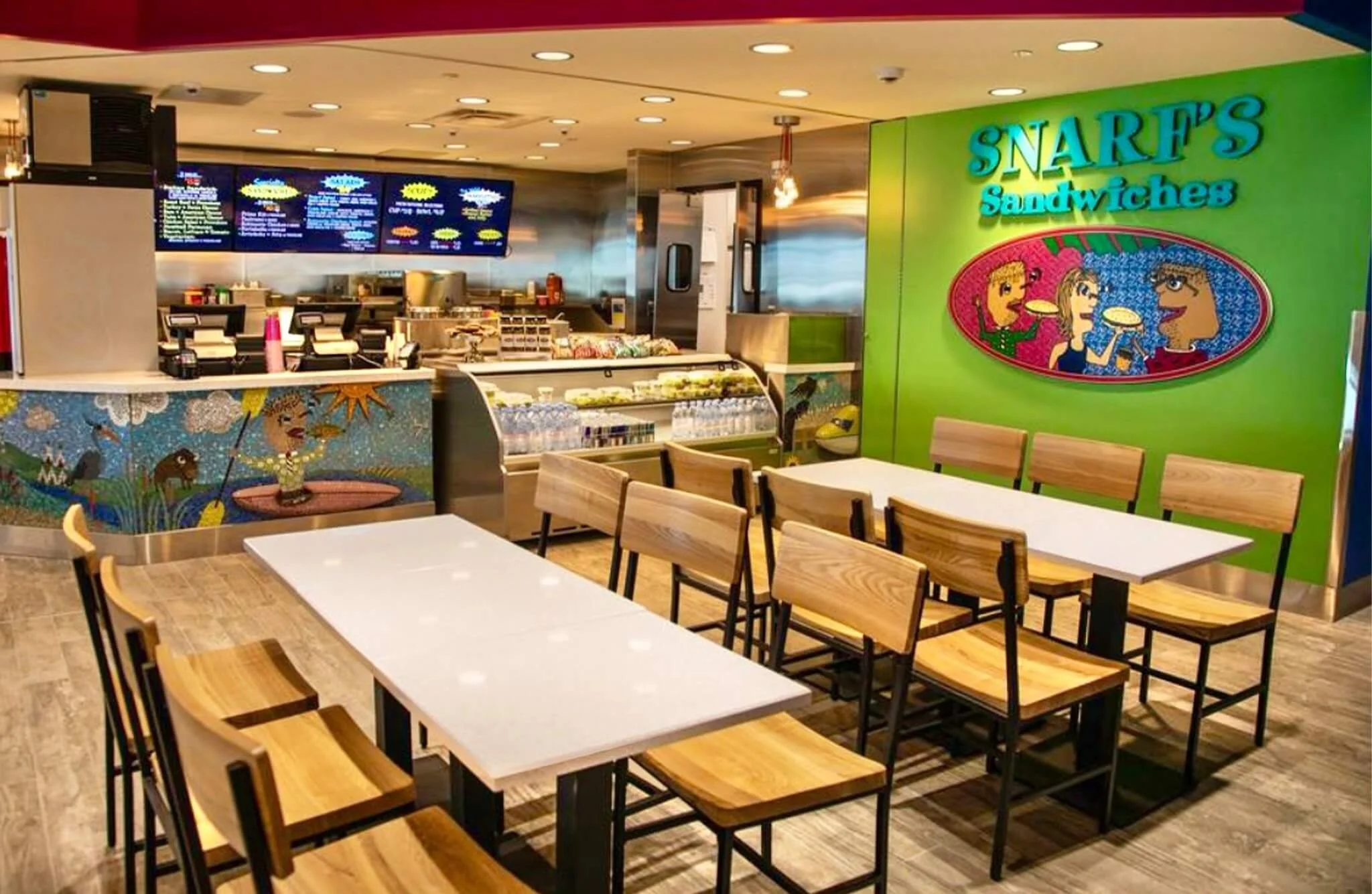
Snarf's Sandwiches has been making sandwiches the right way since 1996. Thirty years later, the brand operates over 60 locations in Colorado, Texas and Missouri, and has a kitchen culture that takes quality seriously from ingredients to operations. When Moonshot began working with the Austin locations, the composting program didn't require a behavior overhaul. It found a team that already cared. Back-of-house staff sorted clean streams without being asked twice. Managers held the standard through turnover. Five locations ran a zero-contamination record not because the program was perfectly designed around them, but because the people running the kitchens treated it like it mattered. That's not something Moonshot can instill. It's something Snarf's already had.
The challenge
Most fast-casual composting programs fail before they scale
Contamination and overflow are the two reasons composting programs collapse in high-volume kitchen environments. Staff move fast, turnover is real, and when a program adds friction it gets ignored. Most haulers never catch contamination because they blind-dump bulk containers — meaning a single bad load gets rejected at the facility and the diversion number goes to zero. Snarf’s walked into this environment and built a zero-contamination record across five locations.
Fast-casual kitchens are not designed for composting
Back-of-house teams are running lean, moving fast, and managing high turnover. A composting program that requires extra steps, extra trips, or extra training in only one language will not survive contact with a real kitchen. The default outcome for most brands is a contaminated stream or an abandoned program.
Sustainability data in fast-casual is mostly unverifiable
Most restaurant brands have no documented baseline for their organic waste stream. Estimates, aggregated guesses, and unaudited numbers don't hold up for ESG reporting, franchise disclosure, or certification. As Snarf's grows across Texas, the gap between what they're doing and what they can prove becomes a real liability.
Moonshot's response
Operational design that removes the failure points
Individual drums placed at the point of prep, sized to each location's volume, exchanged before they reach capacity. No overflow. No contamination. The program fits the kitchen rather than fighting it.
Bilingual training built for kitchen pace
Moonshot trained staff at each location in English and Spanish, covering exactly what goes in the drum. The Snarf's waste stream, mostly bread and vegetable prep, made clean separation simple to teach and sustain. The zero-contamination record is the result.
Pound-for-pound verification and Scope 3 data
Every drum is weighed at the store on pickup day. Each location has its own dashboard, updated weekly. The same data feeds Scope 3 emissions calculations, giving Snarf's audit-ready numbers that grow in value as the brand scales.
The results: A story worth telling.
Across five Austin locations, Snarf's has diverted 44,628 lbs. of organic waste with zero contamination incidents and zero overflow events. That record holds across stores with different volumes, different neighborhoods, and different staff compositions.
The diversion data translates to measurable environmental equivalents: approximately 2,214 trees planted, 28,172 miles not driven, and 10,000 lbs. of CO2 saved. All of it traceable to TCEQ-permitted industrial compost facilities where the material is converted into compost supporting soil health and erosion control across Texas landscapes, including the Edwards Aquifer recharge zone.
For a brand built on clean ingredients and operational integrity, the composting program is a direct extension of those values into the back of house.
Before Moonshot
✗ Organic waste mixed into general trash with no tracking or documentation
✗ Zero visibility into the environmental impact of daily food production
✗ No Scope 3 baseline for waste, leaving sustainability claims undefended
✗ Composting attempted elsewhere in the industry with contamination and overflow
After Moonshot
✓ 44,628 lbs. diverted across 5 Austin locations with zero contamination incidents
✓ Weekly pound-for-pound data per store, audit-ready and shareable with stakeholders
✓ Scope 3 waste emissions documented and reportable for ESG disclosure and franchise reporting
✓ A zero-overflow, zero-contamination operational record that sets the standard for the category


“Moonshot Compost has been an invaluable partner in helping us strengthen our sustainability initiatives in Austin. The data and insights they provide allow us to clearly understand the impact our composting efforts are having on our environment.
We could not be more proud of our teams for their commitment to proper composting practices and the exceptional results they've achieved. Their dedication and attention to details have played a key role in advancing our sustainability goals.”
— Director of Marketing, Snarf’s Sandwiches
Why fast-casual brands choose Moonshot

It fits the kitchen
Drums go where prep happens. Staff don't change their workflow. Diversion happens at the source, not as an extra step.

The data is real
Every pickup is weighed. Every store has its own dashboard. Scope 3 emissions data included. When you need to report, the numbers are there.

It scales with you
Snarf's is expanding into DFW. Moonshot already operates there. Same program, same data standard, new locations ready from day one.
Quick FAQs
-
No. The drum sits where the trash already goes. Staff deposit trim during prep, not as a separate step. Zero workflow interruption.
-
Yes. Austin's commercial composting ordinance requires food businesses to divert organic waste. Moonshot's program meets that requirement with verified documentation.
-
Yes. Moonshot provides weekly weight-based diversion data and Scope 3 emissions calculations formatted for ESG reporting, franchise disclosure, and sustainability certifications.
-
Yes. Moonshot operates in Austin, Dallas-Fort Worth, Houston, and Waco. A brand expanding across Texas can bring the same program to every new location from day one.
Ready to build a composting program that fits how your kitchen runs?
Serving restaurants across Austin, Dallas–Fort Worth, Houston, and Waco with programs designed for high-volume operations and multi-location growth.


