
Case study
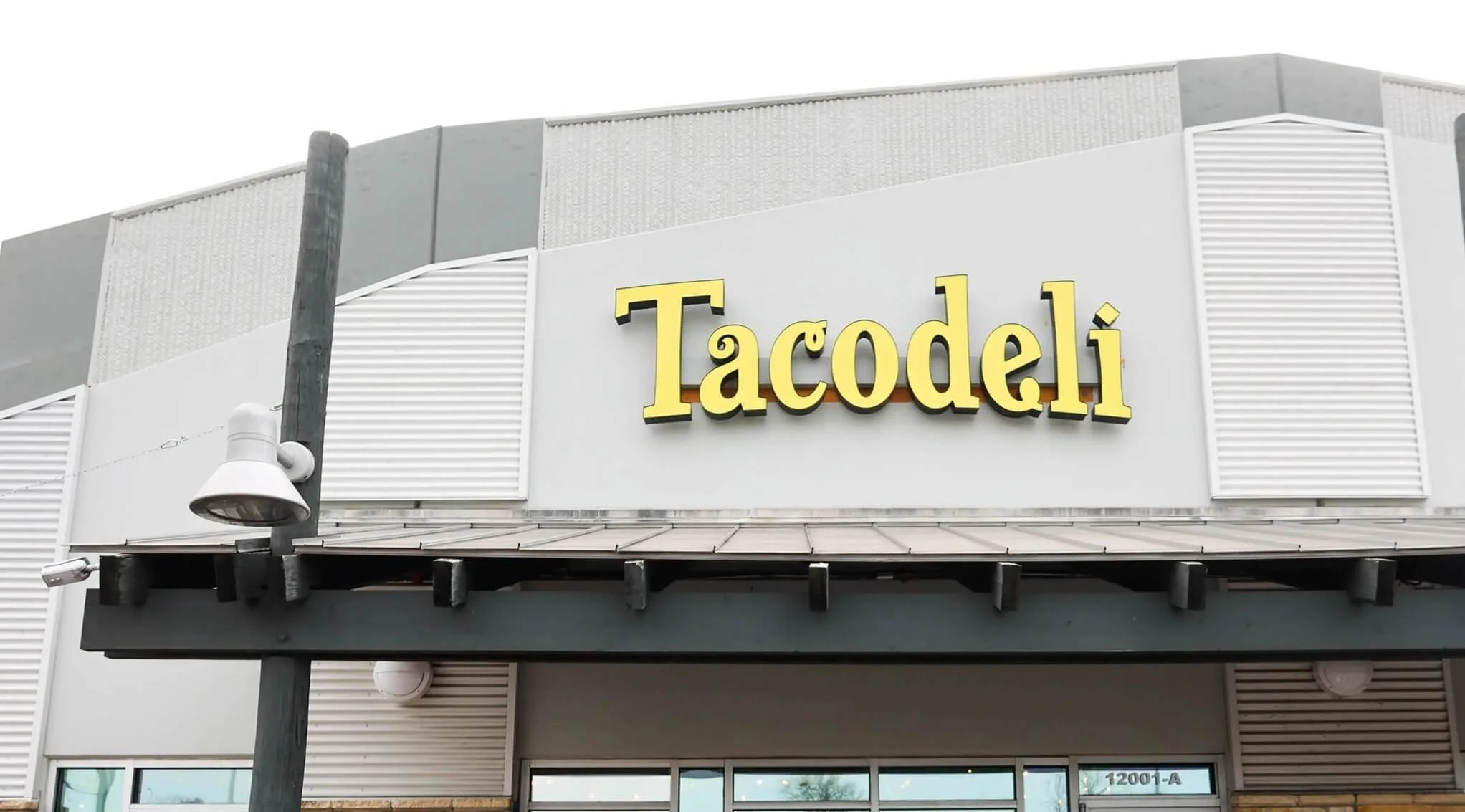
Tacodeli closes the loop on local.
How an Austin-born restaurant group turned kitchen prep waste into a resource for the same Texas soil that grows their ingredients.
Project snapshot
Industry: Restaurants | Locations: Austin, Dallas, Houston | Program status: Active, multi-market
Total organic waste diverted
Carbon Dioxide emissions saved
Investment-grade ESG data
Back-of-house
Across all three Texas markets
Program
100%
traceable
689,838
lbs.
1,020,582
lbs.
Background.
What Tacodeli was looking for and how Moonshot Compost showed up.

Tacodeli has been doing things the right way since it opened in Austin in 1999. Built on a commitment to scratch cooking, local sourcing, and the farmers and producers who make Texas food culture what it is, Tacodeli didn't need to be convinced that sustainability mattered. They were already living it on the front end of the supply chain.
The question was the back end. A kitchen that sources local, seasonal ingredients generates daily prep waste: vegetable trim, citrus, proteins, tortilla production scraps. For most restaurants that material goes straight to a compactor. For Tacodeli, that felt like a broken loop. The same soil that grows their ingredients was getting nothing back.
Tacodeli didn't come to Moonshot looking for a sustainability program. They came looking for a Texas partner who could close that loop with the same care they bring to sourcing. Two Texas-born brands, both rooted in the belief that local means something, building a circular system that starts and ends in Texas.
What Tacodeli was looking for
A circular food system, not just a disposal service
Tacodeli's sourcing philosophy stops at the back door under a traditional waste model. They wanted a program where kitchen prep waste returned to Texas soil, completing the loop from farm to kitchen and back again.
A program built for working kitchens
High-volume scratch kitchens run lean. Any composting program that adds steps, creates confusion, or depends on front-of-house participation in a fast-casual environment will fail. Tacodeli needed something designed for chefs, not sustainability managers.
Verified data for corporate sustainability reporting
As Tacodeli grows, so does the need for defensible impact data. Estimates and volume conversions don't hold up in sustainability disclosures.
A local partner who could show up in person
Tacodeli operates across Austin,Dallas, and Houston. Consistency across three markets requires a partner with people on the ground.
How Moonshot delivered
Agricultural circularity with receipts
Diverted prep waste goes to TCEQ-permitted compost facilities where it's processed into compost, supporting Texas soil health, including erosion control across TxDOT infrastructure. Moonshot provides the verified documentation to prove it.
Back-of-house first, always
Moonshot built the program around prep-line chefs. Drums go where the waste is generated: at the cutting board. No FOH contamination risk. No workflow interruption. The kitchen team owns it because it fits how they already work.
Texas-built, Texas-operated
Moonshot runs its own routes in all three Tacodeli markets with local teams who train in person, in English and Spanish, and return when staff turns over. When something needs attention, Moonshot responds in the market, not through a ticketing system.
Pound-for-pound verification
Every drum is weighed at the curb on pickup day. Each location has its own Diversion Dashboard, updated weekly, with audit-ready data formatted for corporate sustainability reporting and ESG disclosures.
The results.
Tacodeli's kitchen teams are now composting consistently across Austin, Dallas, and Houston with a back-of-house program that fits the pace of scratch cooking. Prep waste that once went to a compactor is now returning to Texas soil through TCEQ-permitted compost facilities, completing the circular loop Tacodeli's sourcing philosophy was already pointing toward.
Before Moonshot
✗ Kitchen prep waste routed to landfill, disconnected from local sourcing mission
✗ No verified baseline for organic waste diversion
✗ Composting logistics dependent on national hauler network with local subcontractors
✗ No store-level sustainability data for corporate reporting
After Moonshot
✓ 1,020,582 lbs. diverted across Austin, Dallas, and Houston with 100% data traceability
✓ Prep waste returning to Texas soil through TCEQ-permitted compost facilities
✓ Local Moonshot teams in all three markets, training in person and responding fast
✓ Weekly pound-for-pound data per location, audit-ready for ESG reporting


Why chef-driven restaurant groups choose Moonshot.

The kitchen comes first
Drums go where prep happens. The program is designed around how chefs work, not around what's convenient for the hauler.

Local means something
Moonshot operates its own routes in Austin, Dallas, and Houston with teams on the ground who train in person and show up when needed. No subcontractors. No call centers.

The loop closes in Texas
Diverted food waste goes to TCEQ-permitted facilities and returns to Texas soil. For brands built on local sourcing, that's not a bonus feature.
Quick FAQs.
-
No. Drums are placed at prep stations, not at a central collection point. Waste goes in during prep, not after. Zero additional steps for the kitchen team.
-
Every drum is weighed at pickup and logged to the Diversion Dashboard by location, updated weekly. Data is formatted for corporate sustainability reports, ESG disclosures, and annual impact communications.
-
It goes to a TCEQ-permitted industrial composting facility where it's processed into compost supporting Texas soil health. That compost contributes to erosion control across TxDOT highways, currently utilized in 22 of 25 TxDOT districts.
-
Yes. Moonshot operates across Austin, Dallas-Fort Worth, Houston, and Waco. As Tacodeli opens new locations in Texas, the same program framework, data standard, and local team infrastructure are already in place.
Ready to build a composting program that fits how your kitchen runs?
Serving restaurants across Austin, Dallas–Fort Worth, Houston, and Waco with programs designed for high-volume operations and multi-location growth.


