
Food waste composting for municipalities and civic institutions throughout Texas.
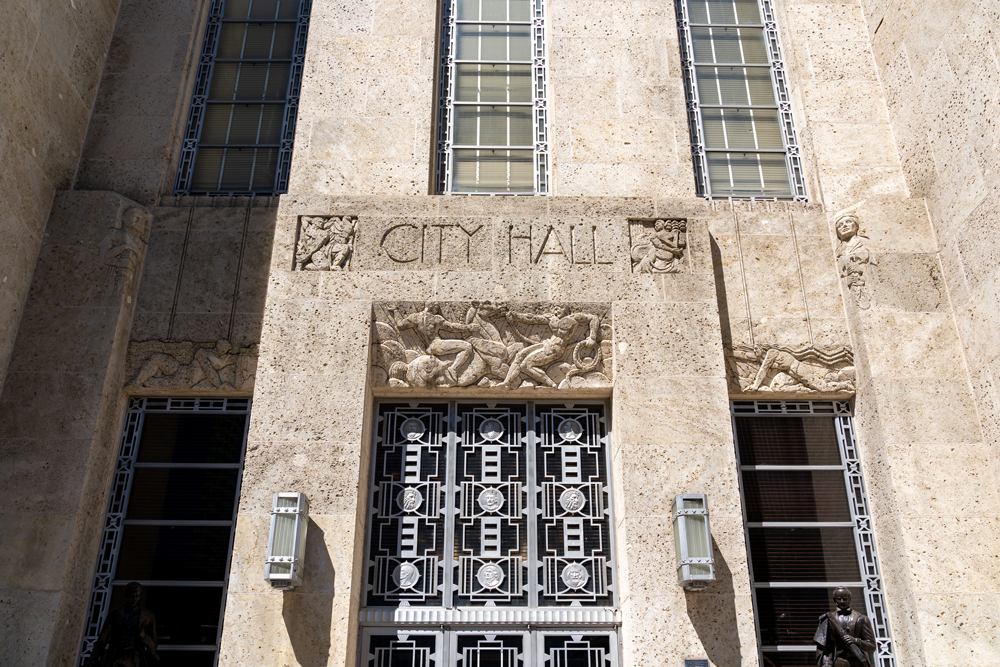
Moonshot Compost helps city and county government operations, public institutions, and civic facilities in Austin, Dallas–Fort Worth, Houston, and Waco divert food waste from landfill through a system that is clean, simple, and measurable.
Our service includes routine pickups, clean container swaps, and verified diversion reporting that gives facilities teams and sustainability coordinators the data they need for civic reporting, public accountability, and institutional sustainability goals without adding complexity.
City and county operations generate food waste in a wide range of settings — institutional dining facilities, public event venues, government office kitchens, libraries, correctional facilities, and civic campuses that serve large numbers of people every day. For most of these facilities, that material goes into the compactor and gets hauled to landfill, where it breaks down without oxygen and produces methane, a potent greenhouse gas.
The volume involved in larger civic operations can make that a significant and ongoing cost. Heavy, wet food waste accelerates compactor wear, drives up hauling frequency, and exposes institutions to rising landfill tipping fees, all of which add financial pressure to operations that are already managing tight public budgets.
Composting offers a practical alternative. By redirecting food waste into a dedicated collection system before it reaches the compactor, civic institutions can reduce disposal costs, extend equipment lifespan, and generate verified diversion data that supports public reporting and institutional sustainability commitments.
A composting program designed for municipal and civic operations.
High-volume institutional dining
Large civic facilities — courthouses, correctional facilities, civic centers, and institutional campuses — can generate significant food waste volumes from dining operations that run across multiple shifts and serve large numbers of people daily. Moonshot builds a collection program around your facility's volume and schedule, with the container count and pickup frequency needed to keep the system running consistently without disrupting operations.
Compactor strain and hauling costs
Heavy, wet food waste is one of the biggest contributors to compactor wear and accelerated hauling cycles in institutional settings. By diverting organics into dedicated sealed containers before they reach your compactor, Moonshot removes the heaviest, most corrosive material from your waste stream — reducing mechanical strain, lowering hauling frequency, and helping facilities teams control disposal costs over time.
Security and logistics requirements
Municipal and civic facilities often have strict protocols around loading dock access, vendor check-in, and on-site operations. Moonshot's drivers are experienced working within secure institutional environments, following established access procedures and coordinating pickups in a way that fits your facility's schedule without disrupting day-to-day operations.
Smaller civic facilities and public offices
Not every municipal operation generates high volumes. Public libraries, administrative offices, and smaller civic facilities still produce food waste from staff kitchens, public café areas, and community events. Moonshot right-sizes the program to fit smaller operations, so the service works whether you manage a single public office or a large multi-building civic campus.
Staff training and program consistency
Municipal workforces often include staff across multiple shifts, departments, and roles, all of whom need to understand how the composting program works. Moonshot supports program launch with hands-on training, bilingual signage, and clear sorting guidance so participation is consistent across your operation from the start.
Public procurement and vendor onboarding
Moonshot has experience navigating public procurement requirements and can work within formal vendor approval processes to get a program up and running without unnecessary delays.
Civic reporting and public accountability
Public institutions are increasingly expected to demonstrate responsible stewardship of resources, including how they manage waste. Moonshot's Diversion Dashboard provides verified, pound-for-pound diversion data that supports civic sustainability reporting, public records requests, and institutional impact disclosures. Every container is weighed at pickup, so the numbers are auditable and defensible.
Divert your food waste in 3 easy steps.
1

Set aside compostables
Place food waste in your Moonshot-provided container.
2

We collect your food waste
We pick it up on a schedule that fits your operations and security protocols, replacing full containers with clean, washed ones at every pickup.
3

We report your impact
Each container is weighed at pickup and logged to your Diversion Dashboard, giving your team verified, auditable data for reporting and sustainability disclosures.
Moonshot's municipal and civic composting programs.
Moonshot works with city and county government operations and civic institutions across Austin, Dallas–Fort Worth, Houston, and Waco.
The data below shows aggregated pounds diverted across Moonshot's municipal customer base, along with the carbon equivalencies.
How Moonshot helped a major Houston civic institution reduce compactor strain and generate auditable diversion data at scale.
A large Houston-area correctional and law enforcement facility managing high daily food volumes across multiple shifts needed a waste diversion solution that could operate within strict security protocols — without adding complexity to an already tightly managed operation. By diverting heavy, wet food waste before it reached the compactor, the facility reduced mechanical strain and hauling frequency while generating verified, pound-for-pound diversion data ready for civic reporting.
To date, the program has diverted over 151,000 pounds of food waste from landfill.
or
Public institutions are accountable to their communities in ways that private organizations are not. When a city facility diverts food waste from landfill, that outcome should be visible, documented, and easy to communicate to elected officials, oversight bodies, and the public.
Moonshot's Diversion Dashboard gives municipal facilities teams a real-time view of how much food waste is being diverted, the carbon equivalencies associated with that diversion, and month-by-month trends over time.
Every figure is based on verified container weights — not estimates — so the data holds up in public records requests, civic sustainability reports, and institutional audits. No login required, and the dashboard can be shared directly with any stakeholder who needs to see it.
Share how much waste you’re diverting.
Discover advanced reporting with our Diversion Dashboard.
Although the environmental aspect of composting is the most readily identifiable, it also bears positive fruit within the social and governance elements.
See how else composting can help your ESG efforts.
Making composting easy.

A clean, washed container at every pickup, designed for secure institutional environments

Verified, pound-for-pound diversion data ready for civic reporting and public records

Bilingual staff training and signage so every shift participates consistently
What happens to your food waste?
For public institutions, waste handling is a question of responsible resource stewardship. Where material goes after it leaves your facility matters, and "into a landfill" is increasingly difficult to justify when a cleaner alternative exists.
When Moonshot collects your food waste, it goes to a TCEQ-permitted composting facility for aerobic processing, breaking it down into compost that returns to the soil rather than producing methane. Every container is weighed at pickup and logged to your Diversion Dashboard, so there's a documented, auditable record of exactly where your waste went.
That end-to-end accountability is what turns a routine waste pickup into a demonstrable act of civic environmental stewardship.

Municipal and civic composting FAQs.
Cleanliness & Operations
-
We typically use sealed 55-gallon drums, which hold approximately 250 pounds of food waste. The sealed design contains odors and prevents pests, making them suitable for institutional kitchens, loading docks, and secure facility environments. Container selection and placement are confirmed during the onboarding site visit.
-
Yes. Our drivers are experienced working within secure institutional environments, following established access procedures, security check-in requirements, and loading dock schedules without disrupting day-to-day facility operations.
-
Pickup frequency is determined by your facility's volume and operational schedule. We'll establish a starting cadence during onboarding and adjust based on actual weight data from the first few weeks. For larger civic facilities generating high volumes, more frequent pickups can be scheduled as needed.
-
If it grows, it goes. That includes all food — cooked, raw, expired, or leftover — as well as coffee grounds, produce trimmings, and compostable paper. Plastics, metals, and glass stay out. We provide signage and training to make sorting straightforward for staff at every level of your operation. See the full list of what to compost.
-
It depends on your volume, and we'll give you an honest read after a quick conversation. Smaller public offices, libraries, and administrative facilities often generate enough food waste to support a right-sized program.
Data & Reporting
-
Yes. Moonshot has experience navigating formal government procurement and vendor approval requirements. If your institution requires a structured onboarding process, we can work within that framework to get the program established without unnecessary delays.
-
Moonshot provides hands-on training at launch, bilingual signage for kitchen and breakroom environments, and ongoing support if sorting issues arise. For facilities with rotating shifts or large staff numbers, we can conduct multiple training sessions to make sure every team participates consistently from the start.
-
Yes. Moonshot operates across Austin, Dallas–Fort Worth, Houston, and Waco, which means a program that works at one civic facility can be extended to others in those markets. Each location gets its own diversion data, which can also be rolled up for portfolio-level civic reporting.
Getting Started
-
Every container is weighed at pickup and logged to your Diversion Dashboard in real time. You get verified, pound-for-pound diversion figures, carbon equivalencies, and month-by-month trends, all based on actual weights, not estimates. That data is formatted in a way that supports civic sustainability reports, institutional impact disclosures, and public records requests.
-
Yes. Because every container is weighed at the curb at pickup — not estimated from invoices or volume calculations — the figures are defensible and traceable. For public institutions that may be subject to oversight or public records requests, that level of data integrity matters.
-
Yes. Food waste diverted through Moonshot is processed into compost that provides erosion control for TxDOT highways — a solution already utilized in 22 of 25 TxDOT districts across Texas. That closed-loop outcome gives public institutions a locally relevant story to tell about where their waste goes.
Start turning your food waste into compost!
Talk with Moonshot about a composting program built for your municipal or civic facility. We make diverting your food waste clean, simple, and backed by the verified diversion data your institution needs.


