
No room for another bin? Solving the loading dock space problem.
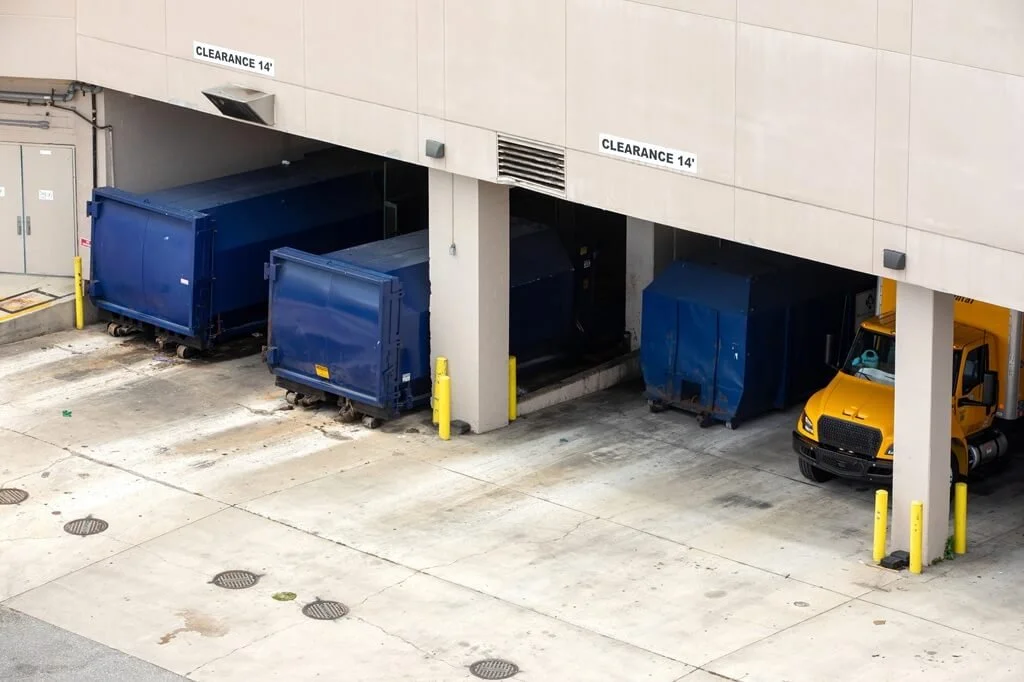
Space is one of the most common reasons a composting program can stall before it starts. Docks can already be crowded with compactors, dumpsters, pallets, and deliveries that have to keep moving, and anything you add to that picture deserves a straight answer.
So here is one. This page covers exactly what a composting program from Moonshot Compost takes up, where the containers can sit, and how we work that out with you before anything gets delivered.
What you're really finding room for.
A Moonshot composting program is built around a sealed 55-gallon drum.
Each drum:
Stands about 3 feet tall and 2 feet wide
Holds roughly 250 pounds of food waste
Has a sealed lid, with no compaction and no liquid drainage
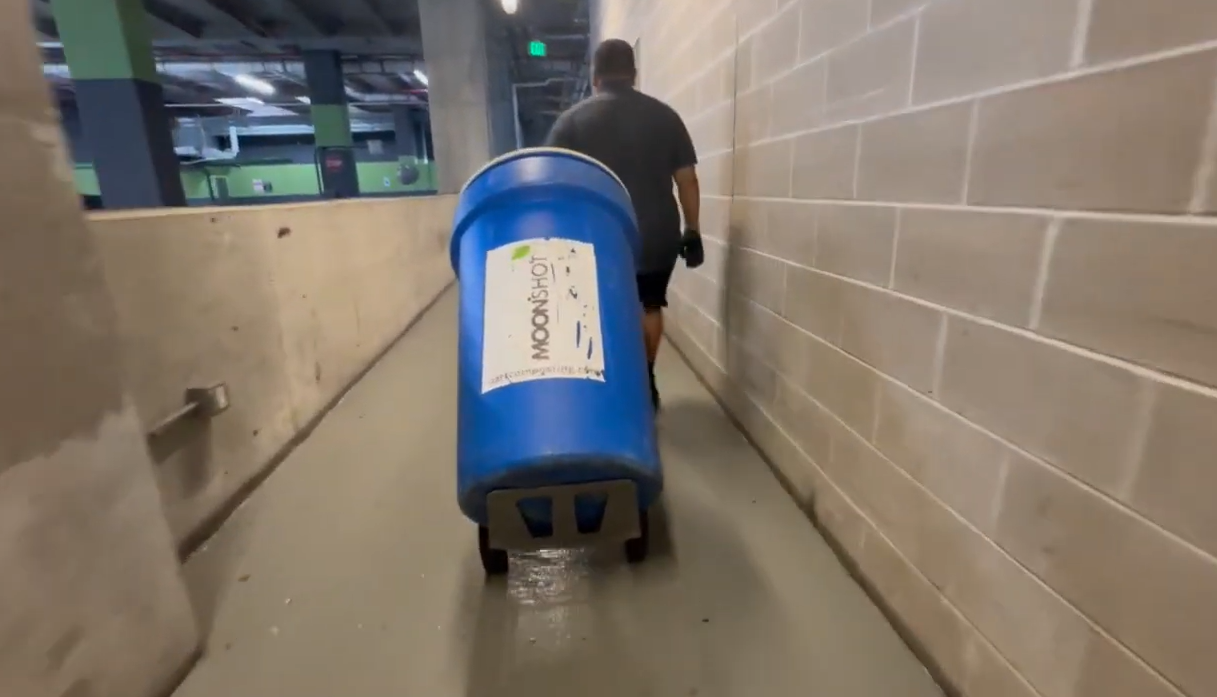
Moves on a dolly, which we provide
Is not bolted down or permanently installed
A dumpster or a compactor is fixed equipment. It gets sited once, it needs clearance for a truck to service it in place, and it stays there.
A drum is a container. It needs somewhere to stand, and it leaves on the truck at every pickup.
That second part matters more than the dimensions do.
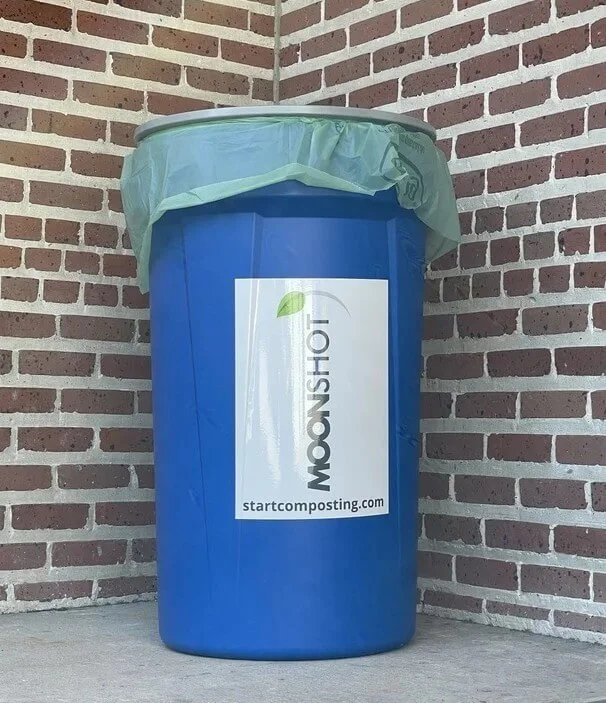
The drum leaves. A clean one takes its place.
At every pickup we remove your full drums and deliver clean, pre-washed ones in their place. Drums are washed off-site with soap and water before they go back into service.
Two things follow from that, and they help settle the space question.
Nothing accumulates. Your dock does not become a holding area for containers between pickups. A dumpster is a permanent fixture on your dock. A drum is not. It arrives, it fills, it leaves.
The containers stay clean. Sealed lids and washed drums mean no liquid drainage, no odor from something that has been sitting for weeks, and no pests.
That second point is what makes the next part possible.
Your drums don't have to wait at the dock.
Because drums come back washed and sealed, they are clean enough to sit inside your building, at the point where the waste is generated.
The workflow is four steps:
We map where food waste is generated across your facility.
A drum goes at each of those points.
Staff fill the drum, put the lid on, and wheel it to the dock ahead of your scheduled pickup.
At pickup, we take the full drums and leave clean ones to go back out to those points.
A grocery store is a good example. Produce, deli, bakery, butcher, and floral each generate food waste in a different part of the building. Rather than hauling all of it to one consolidation point, a drum sits where the waste appears and gets wheeled to the dock for pickup.
Our guidance is the same everywhere: do not build big piles of food waste that you then have to move around. Food waste is heavy. Keep it in small containers, where it is generated.
This system usually means fewer handling steps. Filling a drum where the waste appears beats filling a small bin, carrying it across the building, and tipping it into something larger.
The question isn't storage. It's standing room and a path.
A drum does take up space, and if it stands in the same spot each day, that spot is committed to it. What changes is the scale and the flexibility. It is the footprint of one container rather than a corral sized for a truck to service, and because nothing is fixed in place, the spot can move if your layout or volumes change.
That turns the space question into something that can be answered, and a site visit is how we answer it. We walk your facility with you and work through four main questions:
Where is food waste generated right now?
Where does it go today, and into what container?
Is there a safe, accessible spot for a drum at or near that point?
What is the shortest path from there to the dock?
The goal is always to reduce distance and handling.
If the real worry is dock time, not dock space.
Sometimes "we don't have room" is about scheduling rather than square footage. The dock is not full of equipment. It is full at the hours a truck would come.
That is a different problem with a different answer. Access arrangements vary by site. Some customers give us early morning access. Some give us a key to an enclosed outdoor area. Some use a doorbell. We set this up during onboarding and adjust it if your schedule changes.
There is also a knock-on effect from composting worth knowing about. Removing heavy organics from your main waste stream can reduce how often standard haulers need to access your dock, which can free up dock time for your other deliveries.
You can start smaller than you think.
Almost nobody estimates their food waste volume correctly, and we do not expect you to.
So we start with a service level that has some buffer in it, then dial it in using real weight data from the first few weeks. Every drum is weighed at pickup, so the adjustment is based on what you actually generate rather than on an estimate. Service levels move up or down from there.
If you run multiple sites, the same logic applies at a larger scale. Start at one location, or one department, confirm the footprint works, and expand from there.
Loading dock and space FAQs.
-
Each drum is a sealed 55-gallon container, about 3 feet tall and 2 feet wide. It holds roughly 250 pounds of food waste and moves on a dolly we provide. Nothing is installed or bolted down.
-
Yes. Drums are washed off-site with soap and water and returned clean, so many of our customers place them inside, at the points where food waste is generated, and wheel them to the dock for pickup.
-
Not in the way a dumpster or compactor does. Nothing is installed or bolted down, so there is no fixed infrastructure to design around. A drum does need somewhere to stand, and if it sits at the same point each day that spot is effectively spoken for. The difference is that it is the footprint of a single container, and it can move if your layout changes.
-
Then the drums probably do not belong at the dock. They can sit at the points where waste is generated inside your building and travel to the dock only at pickup. We work out the placement with you during a site visit.
-
On a dolly, which we provide. Staff fill the drum, put the lid on, and wheel it to the dock ahead of the scheduled pickup.
-
Yes. Service levels are adjusted using the weight data from your first few weeks, so starting smaller and scaling up is normal.
-
No. Food waste going into a drum is waste that was already going into your existing containers. It is not additional material entering the building.
-
We coordinate pickup timing with your dock schedule during onboarding. Arrangements vary by site, from early morning access to enclosed outdoor areas to a doorbell system, and we can adjust if your schedule changes.
Let's look at your space.
The space question gets settled faster in person than over email. A site visit is short, we walk the building with you, and a one-page proposal usually follows within about 24 hours. There is nothing to sign to have the conversation.


