
Commercial composting services for Austin, TX.

Moonshot Compost provides commercial composting pickup for Austin businesses as a City of Austin licensed hauler. We place sealed drums where your food waste is generated, weigh every drum at pickup and swap it for a clean, washed one.
Our service is designed to support compliance with Austin's Universal Recycling Ordinance (URO), from the containers on your site to the records behind your annual organics plan. We also serve Houston, Dallas-Fort Worth and Waco.
What Austin requires of businesses with food waste.
Most Austin businesses that prepare or serve food produce food waste every day. When it goes out with the trash, it ends up in a landfill, where it breaks down without oxygen and produces methane. The City of Austin's URO is designed to keep that material out of the landfill.
Who the ordinance covers
Any business with a City of Austin food permit must give its employees convenient access to at least one way to divert organic material. The city accepts three options: donating food, feeding animals and composting.
Multifamily properties with five or more units have their own requirement. Since October 1, 2024, they must give residents access to composting, with one gallon of capacity per unit. Our multifamily composting programs cover the resident side of that rule.
What the city asks you to do each year
The City of Austin lists these requirements for food-permitted businesses:
Submit an organics plan every year between October 1 and February 1.
If a hauler collects your organics, include an invoice or contract from a licensed hauler that shows container size, number of containers and collection frequency.
Post signs in two languages that name the materials each container accepts.
Educate employees within 30 days of hire, whenever the program changes and once a year.
Keep a record of when that education takes place.
Place outdoor organics containers within 25 feet of your landfill trash containers.
The full requirements are on the City of Austin's commercial organics page. For background on the city's wider plan, read how food waste fits into Austin's Zero Waste Goal.
How our service lines up with the ordinance.
Several of the city's requirements depend on your hauler and on how your program is set up. This is how each one maps to our service.
| City requirement | What we provide |
|---|---|
| A licensed hauler | We are on the City of Austin's URO licensed hauler list. |
| An invoice or contract showing container size, number and frequency | Service details are documented in your proposal. |
| Signs in two languages | Dual-language signage in English and Spanish at each drum. |
| Employee education | On-site training at launch across shifts, with retraining any time you need it. |
| Containers placed near trash | Drums placed where your waste is generated, with outdoor placement planned at the site visit. We also provide guidance on placement in terms of compliance. |
| Records of what was collected | Every drum weighed at pickup and recorded by location. |
Your business remains responsible for its organics plan. Our service is designed to support it with the containers, signage, training and records the plan asks about. Multifamily properties can also get resident education support through our multifamily programs.
Austin businesses we work with.
We serve businesses and properties across Austin that generate food waste every day, including:

Restaurants
Restaurant kitchens fall under Austin's food-permit rule, and most of their food waste comes from the prep line. We place drums where prep happens, so staff can sort without extra steps. See how Snarf's Sandwiches composts across five Austin locations.

Multifamily properties
Austin properties with five or more units must provide one gallon of composting capacity per unit. We set up collection points residents can reach easily and support them with clear signage. See how AMLI Residential runs composting across nine Austin properties.

Offices and corporate campuses
On an office or corporate campus, food waste is generated in the kitchens behind cafeterias, catering and on-site food service. A kitchen with a City of Austin food permit falls under the city's rule. We place drums in prep areas and train your food service and facilities teams on site.
Schools and universities
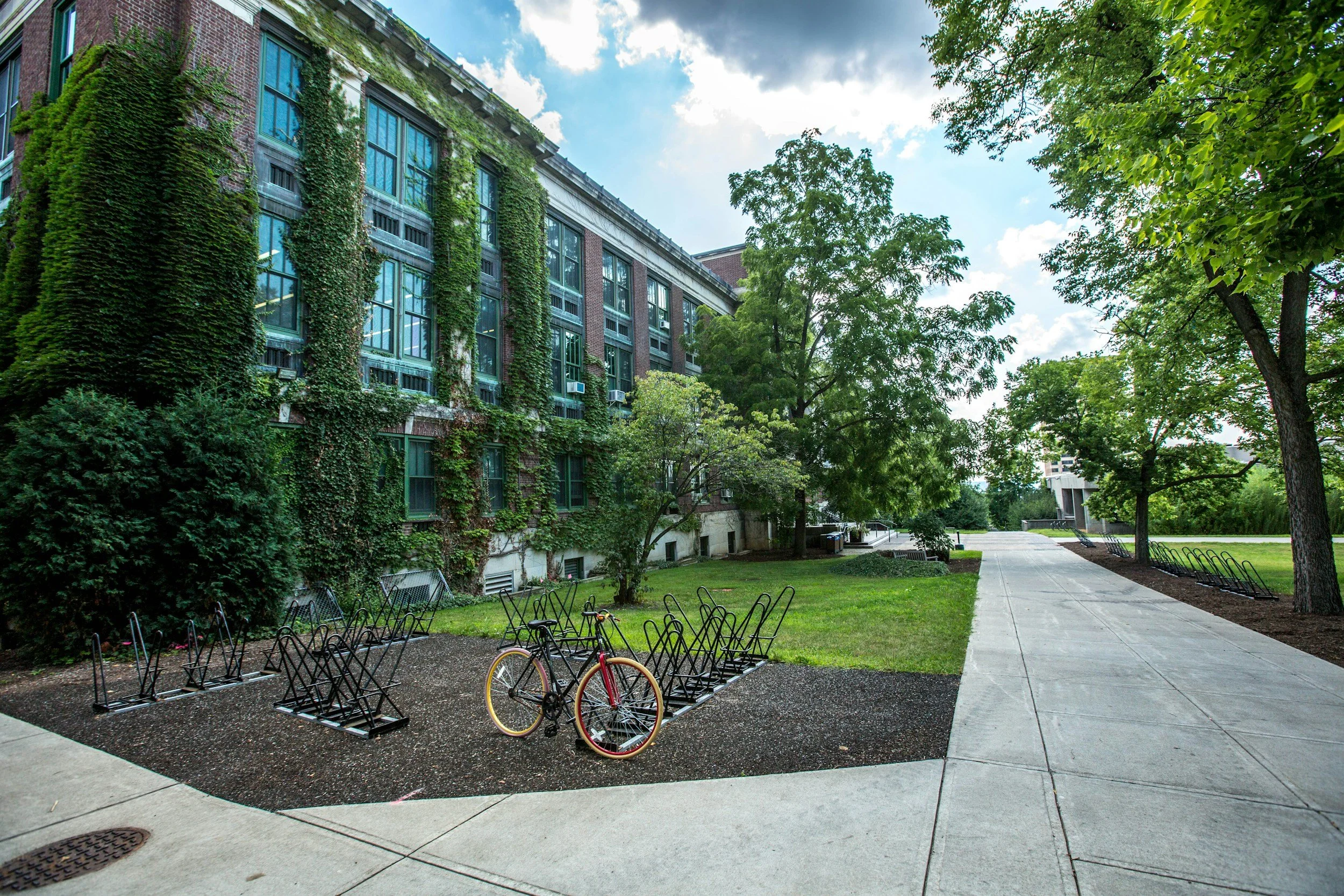
School cafeterias and university dining halls produce steady food waste through the academic year. We place drums in kitchen prep areas, train dining staff on site and retrain whenever your team needs it.
Also serving: Hospitals and healthcare / Assisted living / Hospitality / Grocery / Retail / Industrial and manufacturing / Events / See all industries
How Moonshot composting works for Austin businesses.
1
Fill sealed drums where the waste is made.
Place food waste in a Moonshot drum at the point where it is generated, whether that is a prep line or a shared collection point.
2
We collect, weigh and swap every drum.
3


We collect on the agreed schedule, check each drum for contamination, weigh it and replace it with a clean, washed one.

Track your weights on your Diversion Dashboard.
See pounds diverted and carbon equivalencies for each location on your Diversion Dashboard, updated weekly.
What changes for your team, and how we make it easy.
Adding composting changes a few daily habits. We plan each change with your team before launch and support it once the program is running.
A new sorting habit, with one rule
Your staff will start separating food waste from trash. Our sorting rule is "if it grows, it goes," and dual-language signage at each drum shows what belongs.
Drums where the waste is made
Sealed 55-gallon drums go where your team already handles food waste, such as prep lines or shared collection points. We agree placement with you at the site visit. At every pickup, we remove full drums and leave clean, washed ones, so no soiled container stays on site.
Training that covers every shift
We train your team on site at launch, with sessions for morning and afternoon shifts so everyone hears the same instructions. When staff change, we can come back and retrain.
Service sized to your volume
We estimate your starting volume from your current trash, then adjust drum counts and pickup frequency using real weights over the first few weeks. Most teams settle into the routine within two to four weeks.
Austin businesses composting with us.
AMLI Residential: nine Austin properties
AMLI Residential needed one composting program that met Austin's multifamily requirement across nine properties, from high-rises to garden-style communities. Since October 2024, the nine properties have diverted 16,539 lbs., with only 34 minor contamination instances recorded across the portfolio through weekly photo audits.
“Moonshot Compost has been an excellent partner in bringing composting to our AMLI communities. Their reliable service, clear resident education, and collaborative approach have helped us strengthen our sustainability program and create a more meaningful impact.”
Snarf's Sandwiches: five Austin locations
Snarf's needed a program that could keep up with high-volume sandwich prep across five Austin locations. With drums at prep points and training in English and Spanish, the five locations have diverted 44,628 lbs. of organic waste with zero contamination incidents and zero overflow events.
“Moonshot Compost has been an invaluable partner in helping us strengthen our sustainability initiatives in Austin. The data and insights they provide allow us to clearly understand the impact our composting efforts are having on our environment.”
Records you can use for your plan and your reporting.
Every drum is weighed at pickup and recorded against the location it came from. Different people on your side can use those numbers in different ways.
If you file the organics plan, weighed records by location document your program alongside your hauler invoice. If you report on sustainability, your Diversion Dashboard shows pounds diverted, carbon equivalencies and monthly trends you can use in internal or ESG reporting. See how diversion data fits each reporting framework
If you run several sites, you can view each location on its own, across Austin or across multiple markets.
Your dashboard is shareable by link with no login required, and it is updated weekly. Monthly reporting gives totals by location plus a lifetime total, and we can provide custom reporting on request.
Where your food waste goes?
After pickup, we deliver your food waste to third-party composting facilities authorized by the Texas Commission on Environmental Quality (TCEQ) to accept it. At the facility, the material breaks down with oxygen and becomes finished compost.
We handle the collection and the route to the facility. The destination matters because it is part of the documented path your food waste takes from your dock, which you can point to when your organics program or sustainability reporting is reviewed.

Commercial composting pickup across Austin.
We collect from businesses and multifamily properties across Austin. Bastrop, Cedar Park, and New Braunfels are served today and our service territory is always expanding.
We also serve Houston, Dallas-Fort Worth and Waco, so operators with sites in more than one market can run one program.
Resources for running your program.

Austin's Zero Waste Goal
How the city's food waste rules fit into its wider zero waste plan.
No room for another bin?
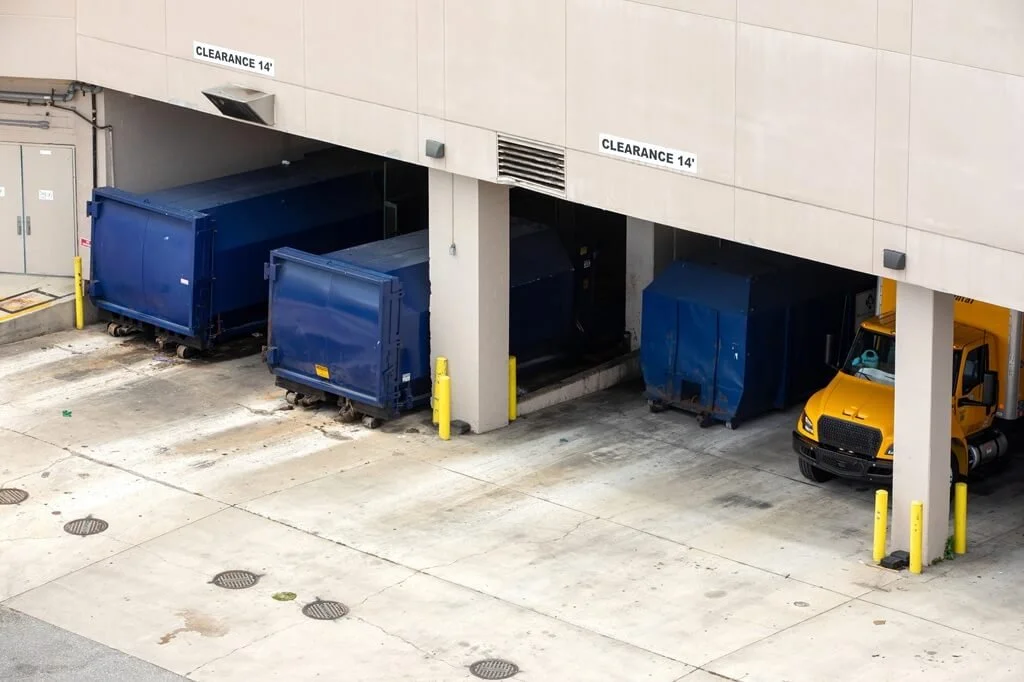
What a composting program takes up on a crowded loading dock, and how we plan drum placement with you before anything is delivered.

Turning diversion data into ESG reporting
How weighed diversion data maps to the reporting frameworks your team may already use, and where the data stops.
Get your commercial composting quote.
Tell us about your site and the food waste you generate. We walk your site, estimate your volume and send a proposal, usually within 24 hours. If your organics plan is coming due, mention your timing when you get in touch.
FAQs.
-
If your business holds a City of Austin food permit, the Universal Recycling Ordinance (URO) requires you to give employees convenient access to at least one way to divert organic material. Composting is one option, and donating food and feeding animals are the others. See the City of Austin's commercial organics requirements.
-
Yes. We are on the City of Austin's list of licensed haulers under the URO.
-
If a hauler collects your organics, the city asks for an invoice or contract from a licensed hauler that shows container size, number of containers and collection frequency. Moonshot Compost’s service details are documented in your proposal.
-
The City of Austin asks food-permitted businesses to submit an organics plan every year between October 1 and February 1.
-
It does if your property has five or more units. Since October 1, 2024, those properties must give residents access to composting, with one gallon of capacity per unit. See our multifamily programs and how AMLI Residential set up composting across nine Austin properties.
-
We provide dual-language signage in English and Spanish, laminated for kitchen environments.
-
Our rule is "if it grows, it goes." That covers all food (raw, cooked or expired), including meat and dairy, plus coffee grounds, floral waste and paper that is not plastic-lined. Plastic, metal and glass stay out. See the full list of what you can compost.
-
We set your pickup schedule at the site visit to match your volume, then adjust it using the weights from your first few weeks of service.
-
We deliver it to third-party composting facilities authorized by the Texas Commission on Environmental Quality (TCEQ) to accept food waste, where it breaks down into compost. See where your food waste goes.
-
We serve businesses in Austin, Houston, Dallas-Fort Worth and Waco. Around Austin, Bastrop, Cedar Park, and New Braunfels are served today and our service territory is always expanding.
If you manage sites in more than one of those markets, you can run one program with location-level reporting across all of them. If you are not sure we reach your address, include it with your quote request and we will confirm.
-
We start with an intro call and a site visit, then send a proposal, usually within 24 hours. After that, we train your staff and launch. Most teams settle into the routine within two to four weeks.
All your questions answered – more commercial composting FAQs.


